Pengfei Han[1]
Overview
To comprehensively and accurately assess the relations between China and the United States in the technology sector, it is essential to distinguish between the concepts of "decoupling" and "dependence". In this report, "decoupling" refers to the incompatibility of technological development paradigms between different technological systems due to varying technical standards, independent of a country's technological strength. Conversely, "dependence" is closely linked to a country's technological strength: the weaker a country's technological capabilities, the greater its reliance on foreign technology. Therefore, this report develops two distinct measures for "decoupling" and "dependence" within a unified framework.
In the 21st century, the dynamics of U.S.-China technology "decoupling" and "dependence" have exhibited divergent trends. Since China's accession to the World Trade Organization (WTO), the overall measure of decoupling between the two countries has gradually decreased, while China's dependence on U.S. technology has followed an inverted U-shaped trajectory—initially increasing and then decreasing, with the turning point occurring at the end of the global economic recession. This inverted U-shaped trend is largely attributable to the knowledge and technology spillover effects between multinational corporations and Chinese enterprises.
The degree of technology decoupling and dependence between China and the U.S. varies significantly across different technological fields. In mature fields, such as internal combustion engine technology, decoupling between China and the U.S. remains relatively low, while China's dependence on U.S. technology is relatively high. In emerging fields, such as drone technology, decoupling is relatively high, whereas China's dependence on U.S. technology is relatively low. In high-tech sectors, U.S.-China technology decoupling has intensified in recent years, accompanied by a decrease in China's reliance on U.S. technology. Notably, in certain fields like drone technology, China has achieved reverse dominance, where the U.S. now depends more on Chinese technology than China does on U.S. technology.
Given the heterogeneity in technology decoupling and dependence across different fields, China's industrial policy should be tailored to different technological areas rather than taking a one-size-fits-all approach. Policies should be differentiated based on the distinct characteristics of emerging and mature technologies to maximize their effectiveness.
As the second issue of the "U.S.-China Technology Decoupling" report series, this policy brief is structured as follows: The first section explains the construction of a measurement system for U.S.-China technology decoupling. The second section investigates the impact of U.S.-China technology decoupling on Chinese enterprises. The third section compares the effects of technology decoupling on Chinese and American enterprises. The fourth section distinguishes between the impacts of "mandatory" and "voluntary" decoupling. Finally, the last section provides policy recommendations based on these findings.
I. Construction of a Measurement System for U.S.-China Technology Decoupling
Similar to academic papers, patents also cite one another, and citation information is extensively used to study knowledge spillovers between different countries and regions. To accurately measure the degree of technology decoupling between China and the U.S., we have linked patent data from both countries and employed an orthogonal decomposition of mutual citation tendencies to construct a measurement system for U.S.-China technology decoupling.
Specifically, to comprehensively and accurately depict the technological relations between China and the U.S., it is essential to distinguish between the concepts of "decoupling" and "dependence" in the technology sector. In this article, "decoupling" refers to the incompatibility of technological development paradigms between different systems due to varying standards. For example, the standard voltage is 220 volts in China and 110 volts in the U.S. Thus, "decoupling" is not necessarily related to a country's technological strength. In contrast, "dependence" is closely tied to a country's technological capabilities: the weaker a country's technological strength, the higher its dependence on foreign technology. Therefore, we have developed two distinct measurements for "decoupling" and "dependence" in the technology sector within a unified analytical framework.
The core concept behind constructing this measurement system for "decoupling" and "dependence" in the technology sector can be illustrated using Figure 1. The axes in this figure represent the tendency of domestic patents to cite foreign patents relative to citing domestic patents. The vertical axis represents the tendency of Chinese patents to cite U.S. patents relative to citing Chinese patents, while the horizontal axis represents the tendency of U.S. patents to cite Chinese patents relative to citing U.S. patents. In the extreme case of "complete decoupling" of the U.S.-China technological systems, the technological trajectories of the two countries would be entirely independent, with no mutual citations between patents from the two countries. This scenario corresponds to the origin (0, 0) in Figure 1. Conversely, in the extreme case of "complete integration" of the U.S.-China technological systems, the tendency of domestic patents to cite foreign patents would be equal to the tendency to cite domestic patents. This corresponds to point I (1, 1) in Figure 1.
Each point in Figure 1 represents a specific dependency relationship between China and the U.S. Along the 45-degree line, the mutual citation tendencies of patents from the two countries are equal, indicating a state of equal mutual dependence. In the region above the 45-degree line, the tendency of Chinese patents to cite U.S. patents is higher than the tendency of U.S. patents to cite Chinese patents, indicating that China's dependence on U.S. technology is higher than the U.S.'s dependence on Chinese technology. This region can be termed the "U.S.-leading" region. The degree of U.S. leadership reaches its maximum at point (0, 1), which can be termed the "U.S.-dominated" state. Conversely, in the region below the 45-degree line, the tendency of Chinese patents to cite U.S. patents is lower than the tendency of U.S. patents to cite Chinese patents, indicating that China's dependence on U.S. technology is lower than the U.S.'s dependence on Chinese technology. This region can be termed the "China-leading" region. The degree of Chinese leadership reaches its maximum at point (1, 0), which can be termed the "China-dominated" state.
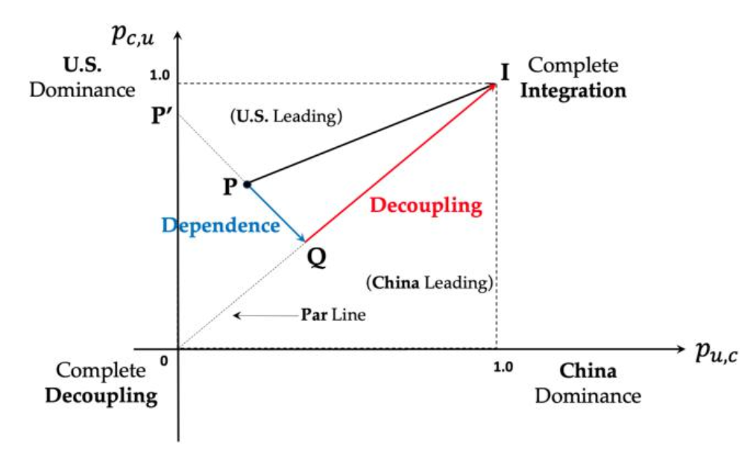
Figure 1. Measures of Technology Decoupling and Dependence
Therefore, each point in Figure 1 represents a specific combination of two indicators: (1) the degree of U.S.-China technology decoupling (indicated by the red "decoupling" label) and (2) China's relative dependence on U.S. technology (indicated by the blue "dependence" label). Specifically, we can project each point (such as point P) in Figure 2 onto the 45-degree line. Along this line, the level of mutual dependence between China and the U.S. is always equal, but the degree of decoupling varies, ranging from "complete decoupling" at the origin to "complete integration" at point I. Therefore, the vector QI (the projection of vector PI onto the 45-degree line) represents the degree of U.S.-China technology decoupling. When a point deviates from the 45-degree line, the relationship between the two countries becomes asymmetrical, meaning one country depends more on the other. The extent of this deviation illustrates the "net" dependence of one country on the other. For instance, at point P, the vector PQ (the orthogonal projection of vector PI onto the 45-degree line) represents China's relative dependence on U.S. technology. The greater the deviation of point P from the 45-degree line, the longer the vector PQ, and the higher China's relative dependence on U.S. technology. Thus, we can project each point in Figure 2 onto the 45-degree line to measure the degree of U.S.-China technology decoupling via vector QI and the relative dependence via vector PQ.
II. Will U.S.-China Technology Decoupling Dampen Innovation in Chinese Enterprises?
Theoretical analysis entails some ambiguity in determining whether U.S.-China technology decoupling will dampen innovation by Chinese enterprises. On one hand, there exists a "complementary effect" of foreign and domestic technology: domestic enterprises benefit from the spillover of foreign technology, so the hindering of such spillover effect, as a result of technology decoupling, may dampen the innovation activities of domestic enterprises. On the other hand, there also exists a "substitution effect" of foreign technology on domestic technology: the introduction of foreign technology reduces the need for domestic enterprises to engage in independent research and development (R&D). Technology decoupling, reducing the supply of foreign technology, forces domestic enterprises to engage in independent R&D themselves to "reinvent the wheel."
Theoretical analysis introduces some ambiguity in determining whether U.S.-China technology decoupling will dampen innovation by Chinese enterprises. On one hand, there is a "complementary effect" of foreign and domestic technology: domestic enterprises benefit from the spillover of foreign technology, so the hindrance to this spillover effect due to technology decoupling may dampen the innovation activities of domestic enterprises. On the other hand, there is also a "substitution effect" of foreign technology on domestic technology: the availability of foreign technology reduces the need for domestic enterprises to engage in independent research and development (R&D). When technology decoupling reduces the supply of foreign technology, it forces domestic enterprises to engage in independent R&D,
Since the impact of U.S.-China technology decoupling on enterprises cannot be fully determined through theoretical analysis alone, empirical explorations may be necessary. Empirical results from this research indicate that for Chinese enterprises, the "substitution effect" of U.S.-China technology decoupling outweighs the "complementary effect," suggesting a strong substitution relationship between the importation of foreign technology and the independent innovation of Chinese enterprises. Therefore, U.S.-China technology decoupling does not dampen the independent innovation activities of Chinese enterprises; instead, it further stimulates them to engage in independent R&D. Based on the U.S.-China technology decoupling measurement constructed earlier, if the degree of U.S.-China technology decoupling now revert to the level of 2000 (the year before China acceded to the WTO), the number of patents filed by Chinese enterprises (a measure of enterprise innovation output) is estimated to increase by 12.4%.
However, it should be noted that although U.S.-China technology decoupling is found to stimulate the innovation activities of Chinese enterprises, this does not imply enhanced business performance. Decoupling leads to a deterioration in business performance: in an ideal scenario of free global technology movement, enterprises can choose which technologies to independently develop and which to adopt through technology transfer depending on their comparative advantages. However, in a completely decoupled scenario, domestic enterprises must independently develop all technologies, including those outside their comparative advantages. Although innovation activities may appear more active, this activeness may largely be "reinventing the wheel" efforts. Such redundant R&D activities, which do not align with enterprises' comparative advantages, could harm their operational efficiency. The resulting decline in production efficiency and profitability consequently compromises business performance. Based on the same U.S.-China technology decoupling measurement, if the degree of U.S.-China technology decoupling reverts to the level of 2000, the return on investment capital for Chinese enterprises would decrease by 7.6%, their total factor productivity would decrease by 2.3%, and their market value would decrease by 3.0%. This finding supports further research on optimizing the balance between domestic substitution and technology importation.
III. Distinct Impact of Decoupling on Chinese and American Enterprises
The impact of U.S.-China technology decoupling on American enterprises is markedly different from its impact on Chinese enterprises. Empirical findings show that U.S.-China technology decoupling has not yet had a significant effect on the innovation and business performance of American enterprises. The distinct impact of U.S.-China technology decoupling on Chinese and American enterprises may stem from two factors.
Firstly, compared to Chinese enterprises, American enterprises generally possess more advanced technologies and are closer to the international technological frontier. Therefore, even with the loss of technological exchanges with Chinese enterprises, the impact of U.S.-China technology decoupling on American enterprises' R&D activities is limited.
Secondly, the global consequences of U.S.-China technology decoupling may differ between the two countries: for China, decoupling from the U.S. is, to some extent, also decoupling from the entire developed world. In contrast, for the U.S., decoupling from China does not have a significant impact on its cooperation with other developed countries. The highly asymmetric impact of decoupling on Chinese and American enterprises aids the interpretation of the intentions behind their respective industrial policies and the assessment of the impacts of those policies.
IV. The Distinct effects of "Mandatory" and "Voluntary" Decoupling on China
To further assess the impact of U.S.-China technology decoupling on Chinese enterprises, it is crucial to distinguish between "mandatory" and "voluntary" decoupling. "Mandatory" decoupling refers to China being the target of unilateral measures by other countries, such as the entity list sanctions by the U.S. or other types of restrictions on the cross-border flow of technology. "Voluntary" decoupling refers to China’s proactive choice to develop an independent technological system based on its own technological strengths. The U.S.-China technology decoupling analyzed earlier pertains to the impact of mandatory decoupling. In cases where China voluntarily seeks technological independence, U.S.-China technology decoupling does not negatively impact the innovation and business performance of Chinese enterprises. Instead, Chinese enterprises may achieve improvements in both innovation and business performance.
V. Policy Recommendations
The impact of U.S.-China technology decoupling needs to be objectively and clearly interpreted. Our research findings do not support the pessimistic view that U.S.-China technology decoupling will dampen the innovation activities of Chinese enterprises. Due to the stronger substitution effect compared to the complementary effect, decoupling will not suppress the independent innovation of Chinese enterprises; instead, it further stimulates them to engage in independent R&D.
However, this does not mean that U.S.-China technology decoupling will positively impact Chinese enterprises. Although decoupling appears to promote R&D activities, it may simultaneously lead to a deterioration in business performance: the apparent increase in innovation activities post-decoupling may involve considerable "reinventing the wheel" efforts. Such redundant R&D activities that do not align with enterprises' comparative advantages may consequently lead to a decline in production efficiency and profitability.
In addition, the impact of U.S.-China technology decoupling on American enterprises is markedly different from that on Chinese enterprises. Empirical analysis shows that decoupling has not yet had a significant impact on American enterprises. This may be due to the generally more advanced technological levels of American enterprises and the differences in the international effects of decoupling between the two countries. The highly asymmetric impact of decoupling on Chinese and American enterprises helps to interpret the intentions behind their respective industrial policies and assess the impacts of those policies.
From China’s perspective, it is crucial to distinguish between "mandatory" and "voluntary" decoupling when examining U.S.-China technology decoupling. In cases where China chooses to voluntarily seek technological independence, U.S.-China technology decoupling does not negatively impact the innovation and business performance of Chinese enterprises. Instead, Chinese enterprises may achieve improvements in both innovation and business performance.
* Original study published as: Han, Jiang and Mei, 2024. Mapping U.S.–China Technology Decoupling: Policies, Innovation, and Firm Performance. Management Science.
[1] Dr Pengfei Han is an Associate Professor of Finance at the Guanghua School of Management, Peking University.




